
A Former Kaolin Mine: A Tourist Attraction, Industrial Heritage Preservation, and Bat Conservation

Published
Upcoming Projects: Just north of České Budějovice, in the middle of a forest near Hosín, Hrdějovice, and Borek, lies a former kaolin mine. It will soon be rediscovered by the general public. A new tour route and an information center will be created at this unique engineering site, and the entire project will also help protect local bat population.
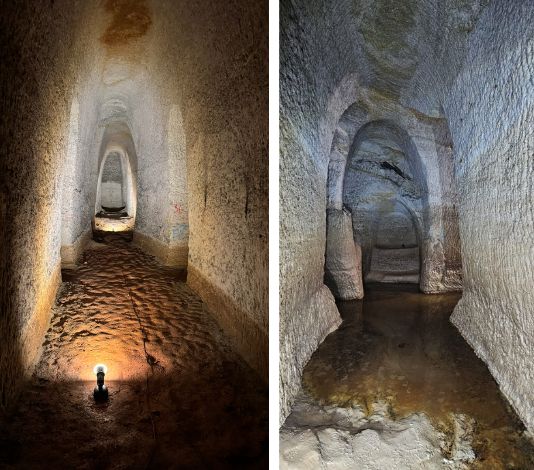
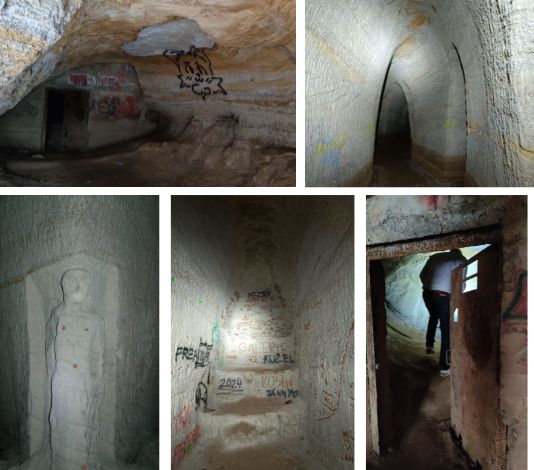
Many residents of the nearby regional capital are familiar with the Orty Nature Monument. For generations, it has been the destination of secret adventures with friends, and more than a few first dates have taken place here. The inscriptions and various pieces of "artwork" covering the walls of the mine tunnels bear witness to countless personal stories. This abandoned kaolin mine has long captivated generations of visitors drawn by its unique atmosphere, romance, and mystery.
Illegal Visits That Threatened the Bats
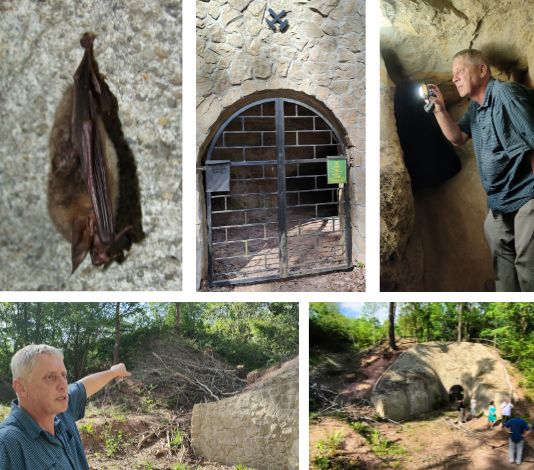
The situation is much the same today. Although the mine's main entrance is secured with a steel gate and iron doors, no barrier can keep vandals out indefinitely. "No matter what we do, sooner or later vandals always find a way into the mine," says Milan Vlášek, the project coordinator whose department at the South Bohemian Regional Authority is responsible for the site. Around 2009, illegal visitors even dug an entirely new entrance into the mine complex. Unfortunately, it broke through directly into the so-called bat corridor. "This created a chimney effect, altering the underground microclimate. As a result, the number of hibernating bats began to decline dramatically," explains Vlášek. He adds that the unauthorized entrance also led to a sharp increase in the number of people entering the mine.
Photographs circulating online showed large groups exploring the underground passages, where activities ranged from adventure games to cycling through the tunnels. Many of these visits took place during the winter months, when bats need complete peace and undisturbed conditions for hibernation.
Every winter, five bat species hibernate in the Orty mine, while another four species use the site in some years. For the brown long-eared bat (Plecotus auritus), Orty is the most important hibernation site in Central Europe.
A Deliberately Sealed Passage
In 2013, torrential rainfall flooded the mine, and the main access tunnel became largely filled with sediment, leaving only a narrow opening beneath the ceiling. However, the illegal entrance remained accessible until 2019, when it was permanently sealed as part of a comprehensive effort to secure the entire mine. Since then, the number of unauthorized visitors has dropped dramatically. The population of hibernating bats quickly returned to its previous levels and has continued to grow ever since.
Another passage, however, was deliberately filled in sometime during the 20th century. The reasons for sealing it remain unknown. This corridor will become part of the future visitor route, serving as the exit from the mine—and it may still hold some secrets. During the preparation of the project, the tunnel was partially cleared to determine its exact direction and condition. In the process, another, previously unknown tunnel was discovered, which was also filled in and extended at least 50 meters to the west. It is therefore possible that another mining complex will be found.
Everyone responsible for opening the mines to the public at the Orty Natural Monument is curious to find out what else the underground holds. We should know by the end of this year.
How can we save the mine? Let's send people in there
Vandalism also carries the risk of compromising the structural integrity of the mine. Collapses have already occurred in some areas; the most recent one took place in 2024, when a section known as Charon collapsed. Paradoxically, officially opening the former mines to the public seems to be the only way to stop their destruction and thus preserve this technically unique mining complex for future generations.
It is estimated that the Orty mines contain a total of 5.6 km of underground tunnels, 700 m of which will be opened to the public as a tour route. The route will be fully accessible and will focus not only on the history of the mines and mining but also on the geological features of this site. For example, do you know what the so-called “Hosín balls” are? And yes, the mine tour will, of course, also cover bats and other underground fauna.
All underground works will be carried out in close coordination with the Czech Cave Administration, which will provide expert oversight throughout the project. The newly created visitor route will also be operated by the organisation's cave specialists.
A pencil factory and a glimpse of the Mesozoic Era from the D3 highway construction site - all in one
Part of the tourist route will be above ground. A new visitor center will be built at the entrance to the underground complex, which, in addition to the phenomena mentioned above, will also focus on the history of the mines’ founder, the Hardtmuth company in České Budějovice. The company mined kaolin here and used it to manufacture pencils and porcelain until 1898. There will also be a display of their products.
And now a bit of geology: The Orty Natural Monument offers a glimpse, through its underground passages, of Cretaceous sediments that formed on the shore of an ancient lake. These sediments are part of the so-called Klikov Formation and represent the best-preserved fossilized flora in the world. In addition, the visitor center showcases another geological rarity: tree trunks - and not just any tree trunks. “During the construction of the nearby D3 highway, fossilized tree trunks were discovered - the largest of their kind in the Eastern Hemisphere,” explains M. Vlášek.
These are large deciduous trees of the genus Paraphyllanthoxylon, and they, too, will be on display at the visitor center. The South Bohemian Museum and the National Museum will prepare the geological exhibition for Orty.
The visitor center and the surface trail will be open year-round, and there will also be educational sessions for schools and seniors. The underground area, however, will be closed from October through March so as not to disturb the bats during hibernation.
When will something start happening?
In 2026, at least rough landscaping of the above-ground section is planned; this includes an administrative building with an information center, an access road, and a visitor parking lot.
Work underground can only be carried out until the bats “go to sleep”; in addition to securing the tunnels and constructing a new entrance and exit, electrical wiring will need to be installed and a security system built underground.
Work on the underground section will begin in July 2026. As part of the site preparation, the mine was closed and secured on June 16, 2026. If we were to believe in numerology, this is a symbol of harmony, care, responsibility, and new beginnings. The sum of all the digits yields the powerful master number 22. This symbolizes mastery, grand visions, the ability to turn dreams into reality, and building a solid foundation for the future.
Construction is scheduled to be completed in December 2028, and the entire complex plans to welcome its first visitors in the spring 2029.
Relieving Overvisited Heritage Sites and Strengthening Biodiversity
Although the project is primarily focused on sustainable tourism in this unique location, it will also contribute to another priority area supported by the Swiss–Czech Cooperation Programme. By protecting the bats' natural hibernation site, the project will help stabilise local bat populations and strengthen biodiversity in the area.
At the same time, once completed, the project will offer visitors an attractive alternative destination, helping to promote a more sustainable distribution of tourism across the South Bohemian Region and easing pressure on some of its most heavily visited attractions. Readers will no doubt have their own ideas about which destinations these might be.
Help Bring the Story of Orty Back to Life
The recent history of the Orty mine is well documented. What is still missing, however, is the period before 1989. The owner of the site and project promoter, the South Bohemian Region, is therefore asking for the public's help. If you have any historical materials - newspaper articles, photographs, or even memories and stories passed down orally about Orty Nature Monument during that period - please share them.
https://zp.kraj-jihocesky.cz/pomozte-nam-ozivit-pribeh-ortu
Project information:
Project: Opening the Former Orty Mine and Nature Monument to the Public
Project Promoter: South Bohemian Region
Total Budget: CZK 99 550 979,85
Funding from the Swiss–Czech Cooperation Programme: CZK 79 640 783,88
Programme: Sustainable Tourism and Enhancing Biodiversity
Website: https://zp.kraj-jihocesky.cz/oddeleni/projekty-publikace-propagace/projekty/probihajici-projekty/zpristupneni-prirodni-pamatky